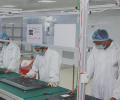
Leading home-grown companies - Dixon Technologies (India), Amber Enterprises India, Tata Electronics, Chennai-based Munoth Industries, and Murugappa Group - along with global majors such as Japan's TDK Corporation, Taiwan's Hon Hai Technology Group (Foxconn), Austria's AT&S Austria Technologie & Systemtechnik AG (AT&S AG), and Japan's Murata Manufacturing Co, among others, have expressed initial interest in participating in the Rs 22,919 crore production-linked incentive (PLI) scheme cleared by the Union Cabinet, according to those privy to stakeholder discussions with the government.
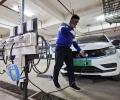
The government on Friday approved an electric-vehicle policy, under which duty concessions will be given to companies setting up manufacturing units in the country with a minimum investment of $500 million, a move aimed at attracting major global players like US-based Tesla. According to an official statement, the companies setting up manufacturing facilities for e-vehicles will be allowed to import a limited number of cars at lower customs duty. The policy seeks to promote India as a manufacturing destination for EVs and attract investment from reputed global EV manufacturers, it added.

"We are concerned about the data localisation law and the new e-commerce regulations...they do not fully take into account the needs of all stakeholders, including American and other foreign companies," acting principal deputy assistant secretary of the US, Thomas Vajda said.

The company is eyeing sales of 8,000 units per month for the Kylaq, which starts at Rs 7.89 lakh (ex-showroom) and boasts 96 per cent localisation.

India maintains "high" import duties on a wide range of American goods such as agricultural items, drug formulations, and alcoholic beverages, besides imposing non-tariif barriers, a US report has said. A day before announcing reciprocal tariffs, the US Trade Representative (USTR) released the 2025 National Trade Estimate (NTE) Report on March 31.

Dining today isn't just about food -- it's about the experience and the story.

Post-election capital expenditure (capex) has been weak at 2 per cent year-on-year (Y-o-Y) in M9FY25. The FY25 revised estimates (RE) indicate 7 per cent growth in FY25 against FY24, implying 21 per cent Y-o-Y growth in Q4FY25 government capex.

Prime Minister Narendra Modi and US President Donald Trump have vowed to move forward with plans to work together to build US-designed nuclear reactors in India. The decision was made during their meeting at the White House, where they also agreed to significantly expand energy cooperation. The move comes after India announced plans to amend its nuclear liability law and the Atomic Energy Act, which had previously been obstacles to the implementation of the US-India civil nuclear deal.

'Netflix, Amazon Prime Video, Crunchyroll, and Disney+ Hotstar are continuously expanding their Anime libraries.'

The October-December quarter (Q3FY25) results of fast moving consumer goods (FMCG) major Hindustan Unilever (HUL) indicated weak demand, with urban growth muted and rural showing recovery. Consolidated revenue grew by 1.6 per cent (volume was flat) to Rs 15,818 crore, due to price hikes. Prices of key raw materials such as palm oil and tea remained elevated, leading to compression of gross margin.
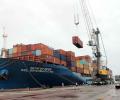
Industry associations and companies in the United States, including the US Chamber of Commerce, Coalition of Services Industries and the iconic bike company Harley Davidson have called on the Donald Trump dispensation to push India to reduce tariffs, non-tariffs, and regulatory barriers to boost American exports.

'As the markets are expected to remain jittery in the near term, we advise investors to use this opportunity to enter quality largecaps from a long-term perspective.'

For India to transform into a high-income country with a projected gross domestic product (GDP) of $23-35 trillion, will need a sustained annual growth of 8 per cent to 10 per cent. This will be powered by India's demographic dividend, technological innovation, and sectoral transformation, according to the "India@2047: Transforming India Into A Tech-Driven Economy" report by Bain & Company and Nasscom. By 2047, the services sector is expected to contribute 60 per cent of India's GDP, while manufacturing will account for 32 per cent, both playing a pivotal role in economic expansion.

German luxury carmaker Mercedes-Benz is considering assembling more electric vehicles at its plant in India not merely to gain cost advantage but also to meet its zero emission mobility and carbon neutral setup goals, according to a senior company official. Mercedes-Benz India, which currently assembles its flagship electric luxury sedan EQS at its Chakan unit, is considering localisation of other models depending on demand.

'More investors now view the stock market as a valuable opportunity, though many still seek quick gains, leading to a rise in futures and options trading.'

The US Trade Representative noted that India's average applied tariff rate stood at 17% per cent, the highest of any major world economy.

From setting up cutting-edge facilities to cater to the domestic market and building capabilities of global standards, the action is building up.

'The policies announced by his administration are implemented faster.'

'Then select those that are well-aligned with your risk-return profile and investment time horizon.'
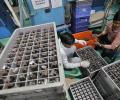
The new four-wheeler (4W) electric vehicle (EV) policy may spur the entry of global majors. The manufacturing policy cuts Customs duty to 15 per cent, given a minimum investment commitment. It calls for a minimum investment of Rs 4,150 crore (about $500 million) for making electric four wheelers (e-4Ws), with manufacturing to commence within three years of approval.

For the first time in history, the luxury car market is poised to cross the sales mark of 50,000 units in 2024, with Mercedes leading the way
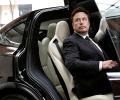
'Companies like Tesla and others have been given a long rope in India.'

Foreign capital flows into the Indian real estate jumped over three-fold to $23.9 billion during 2017-21 period as compared to the previous five years, according to Colliers-FICCI report. In its report 'Foreign investments in Indian real estate turn a corner', property consultant Colliers mentioned that the global investors have shown an increased inclination towards investment in Indian real estate buoyed by regulatory reforms introduced in 2016. "Foreign investors, who had previously refrained from investing in the Indian real estate market due to the lack of transparency, started investing in the country with greater optimism from 2017," Colliers said.

This is not the first EV that Mercedes would be making in India though. It has been making the EQS sedan here for the last 18 months, and has sold 500 units of the car.

With nearly 100 launches and unveils, the Bharat Mobility Global Expo 2025, held in Delhi from January 17 to 22, made one thing clear to automobile enthusiasts: Electric vehicles (EVs) are the way ahead for the Indian auto market for years to come.

The stock of Voltas, the country's largest room air- conditioner (RAC) maker, is up 22 per cent in the past three months. Robust demand on the back of a sweltering summer, distribution expansion, slew of launches and backward integration are expected to forge a good operating performance for the company. In the core RAC segment, there are multiple triggers for the company.

'Rising Covid cases and localised lockdowns are being closely monitored.'

Private equity and venture capital investments more than halved to $3.6 billion in May 2021 when compared to the preceding April's $7.5 billion and a third lower than the year-ago period's $5.4 billion, a report said on Monday. However, on a year to date basis, the venture investments by these two categories of investors have doubled to $20 billion for the first five months of 2021, the report by industry lobby IVCA and consultancy firm EY said, stressing that investors continue to remain bullish. It can be noted that the country underwent the ravages of the second wave of the pandemic since April this year.

Traversing from being just vehicle manufacturers to mobility solutions providers amid a raging debate over which eco-friendly technology must be incentivised, the Indian automobile industry is driving in the new year under the shadow of a slowdown in sales with the post-pandemic pent-up demand in distant memory. The shift in the auto industry -- where advanced technologies like autonomous driving, vehicle intelligence, connected features and electrification are quickly gaining traction -- will be reflected in the upcoming Bharat Mobility Global Expo in which India's flagship Auto Expo has been clubbed to be held from January 17-22, 2025 in Delhi-NCR.

Organisations are facing growing privacy concerns over the use of generative artificial intelligence (GenAI) while getting attractive returns from investments in privacy, according to Cisco's latest Data Privacy Benchmark Study. The findings highlight the responses from 2,600 privacy and security professionals across 12 geographies, said the annual review of key privacy issues impacting business. "Organisations see GenAI as a fundamentally different technology with novel challenges to consider," said Dev Stahlkopf, Cisco Chief Legal Officer.

International companies usually store data on global servers and the requirement to store data locally would require them to make an additional investment. But policymakers in India believe storing data locally would help monitor and conduct investigations if the need arises.

ABB India's March quarter results (Q1CY24) were led by strong margin performance. Revenue was, however, largely in line with estimates at Rs 3,080 crore (up 28 per cent Y-o-Y and up 12 per cent Q-o-Q). The growth was across electrification (30 per cent Y-o-Y), process automation (73 per cent Y-o-Y) and robotics & motion (8 per cent Y-o-Y).

'In the medium to long term mid-caps tend to generate higher returns, albeit with increased volatility.'

With the recent launch of smartwatches, home-grown smartphone maker Lava is looking to secure a strong foothold in the Indian wearables market. The company aims to capture up to 20 per cent of this segment over the next few years, according to a senior executive.
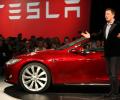
If Tesla comes in, India's position as a manufacturing hub will rise many notches, as it will become only the second country, after China, to have both Apple as well as Tesla.

Why are financial-technology (fintech) players moving back to India, or doing the reverse-flipping?

'In April, we saw a 10 per cent growth in our own volumes.'

'Our objective is to reach a localisation rate of 50% in the span of five years.'

'Two would be premium products and three would be mainstream products.'

German carmaker Volkswagen plans to invest Rs 1,500 crore in India over the next 6 years on various activities, including local production of engines, as it aims to consolidate position in the country.
